

Blog · Performance science
The physics of performance, explained.
Aerodynamics, CdA, W′bal, pacing and everything that decides whether your athlete crosses the line with reserve or empty.
Latest articles
- Time trial6 min readHow much time each corner costs you in an urban time trial, and how much sprinting out of it is worthEach corner that forces you down to 25 km/h costs about 6 seconds at 300 W; twelve corners, over a minute. How much you get back by sprinting out of it.Read article
- Time trial5 min readTime trial in the rain: how much wet tarmac costs you and how to distribute powerWet tarmac raises rolling resistance and a soaked skinsuit raises CdA: a 40 km time trial is 80 seconds slower at 300 W. What changes in pacing and corners.Read article
- Equipment6 min readWeight or aerodynamics: from what gradient a kilo less is worth more than a lower CdAOn the flat, lowering CdA by 0.005 m² saves 22 s over 40 km and a kilo only 2. At 6 % the kilo is worth 73 s. Where the crossover is and what to buy.Read article
- Pacing5 min readThe time trial start: how hard to push in the first seconds, and why a fast start is worth so littleStarting at 500 W for 10 seconds saves 2 s on a 40 km time trial with the same energy. Starting easy loses 1.6 s. Why the start matters less than it seems.Read article
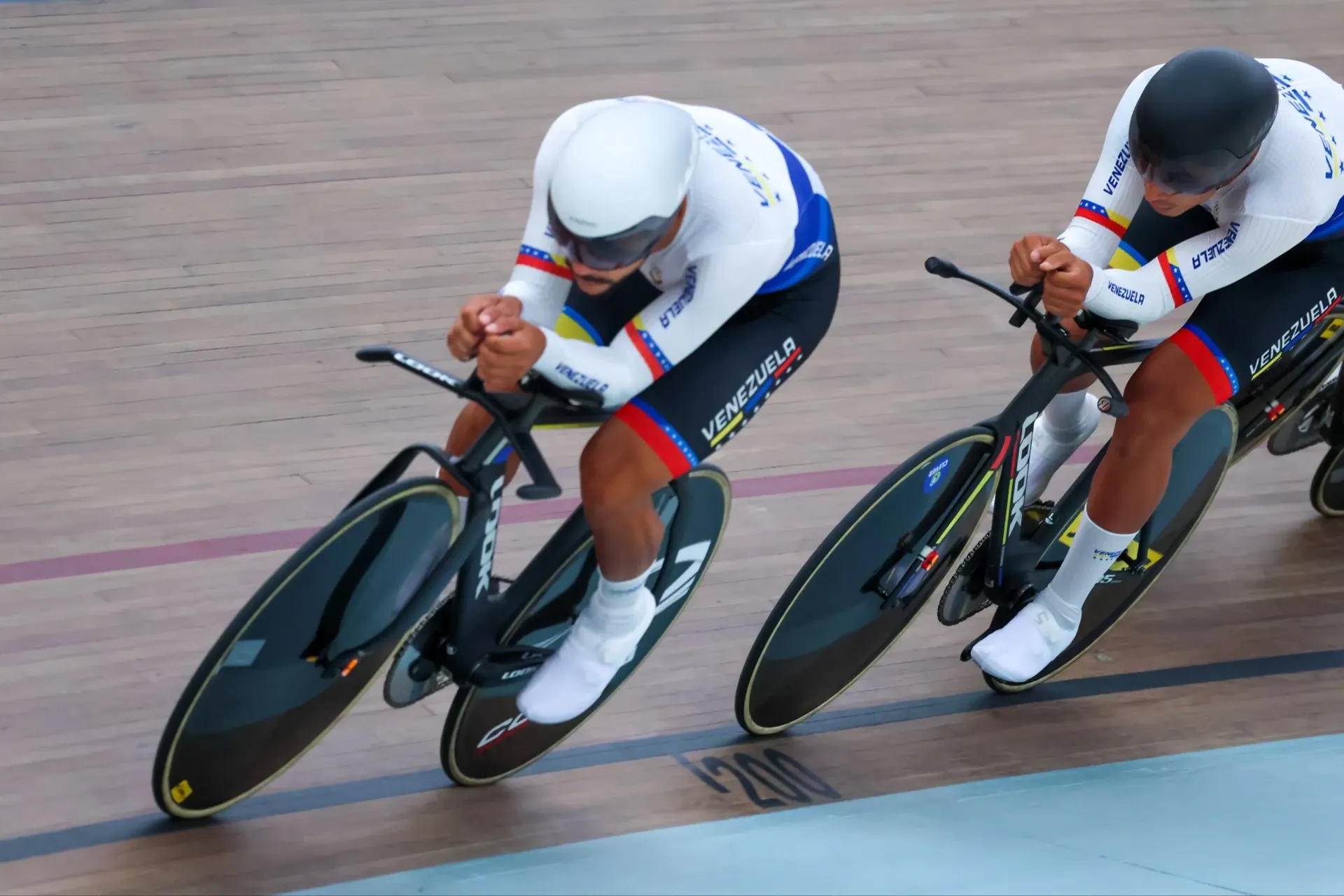
- Time trial7 min readTeam time trial: turns, drafting and how long each turn should lastFour riders at 300 W average ride 47.5 km/h, four more than one alone. How much power each position takes and how long a turn can last without blowing up.Read article
- Pacing6 min readOut-and-back time trial in the wind: why a headwind costs more than a tailwind gives backWith a 14 km/h wind, a 40 km out-and-back time trial is almost 2 minutes slower though half is a tailwind. Why, and how to distribute power.Read article
- Aerodynamics7 min readChung method errors: what skews road-measured CdA and how to avoid itAn unseen 1 m/s headwind inflates CdA by 17 %; a speed sensor reading 1 % high lowers it by 3 %. The typical virtual elevation test errors and how to avoid them.Read article
- Time trial6 min readHow accurately a physical model predicts time-trial times, and which input weighs most in the errorPrediction error comes from the inputs: 1 % of CdA is 11 s over a 40 km time trial, 1 % of power 12 s and a kilo 2 s. How to sharpen it.Read article
- Pacing6 min readCycling pacing and aerodynamics glossary: CdA, Crr, W′bal, critical power and moreWhat CdA, Crr, critical power, W′bal, normalized power and ETA mean, explained in two lines and linked to the article that covers each one.Read article
- Track7 min readThe hour record: how much power it takes and why CdA and air decide as much as legsRiding 56.8 km/h for an hour takes between 400 and 540 W depending on CdA and air density. The calculation, the role of altitude and how an attempt is planned.Read article
- Equipment6 min readRolling resistance coefficient (Crr) in cycling: what it is, what it costs and how to measure it on the roadGoing from a Crr of 0.004 to 0.005 costs 9.5 W at 40 km/h, almost a minute over a 40 km TT. What Crr is, what it depends on and how to measure it with a power meter.Read article
- Aerodynamics7 min readAir density in cycling: how much altitude, heat and pressure change your speedThinner air drags less: at 2000 m a 40 km TT is 4 minutes faster at equal power, but the body produces less. How to calculate it and how to plan with it.Read article
- Time trial7 min readHilly time trial: TT bike or road bike? Where the break-even point liesAt 300 W the TT bike is faster up to about a 6 % gradient and the road bike beyond it. The calculation, its assumptions and how to decide on each course.Read article
- Aerodynamics8 min readThe aerodynamic impact of the time-trial skinsuit: a CdA-based quantificationThe time-trial skinsuit is one of the best aerodynamic investments per euro. We quantify its impact in CdA, watts and seconds.Read article
- Time trial7 min readWhere watts matter most in a time trial: power, CdA and speedNot all watts pay off equally. Using a physical model, we analyse when aerodynamics dominates a time trial and when weight does.Read article
- Aerodynamics7 min readHow many watts you save in the peloton: quantifying the draft after Blocken (2018)Deep inside a large peloton, drag falls below 10% of an isolated rider. We quantify the power saved by drafting, after Blocken (2018).Read article
- Aerodynamics5 min readAero leg covers: what you actually gain by covering the legThe legs are among the cyclist's largest drag sources. We quantify, with a physical model, what covering them actually gains.Read article
- Aerodynamics6 min readHow to choose a TT helmet for your head, back and shoulder positionThe fastest TT helmet does not exist in the abstract: it depends on your head, back and shoulders. How to choose one for your real position.Read article
- Equipment6 min readOSPW pulley cages: how many watts you really gain, and whether the weight is worth itOversized pulley wheel systems (OSPW) promise free watts. We quantify their real friction saving against their weight penalty, and compare it with waxing the chain.Read article
- Equipment7 min readWorldTour time-trial skinsuits: Santini, Pissei, Vorteq and Bioracer, and what really separates themSantini, Pissei, Vorteq and Bioracer dress the WorldTour. We compare their aerodynamic approach and what separates their suits from stock ones.Read article
- Aerodynamics8 min readAerodynamic analysis at the Tour de France: why measuring your CdA changes everythingAbove 45 km/h, 80-90% of your power goes into fighting the air. How Tour de France teams work on aerodynamics and how to measure your own CdA.Read article
- Aerodynamics7 min readHow to measure your CdA without a wind tunnel: the Chung method, step by stepThe virtual-elevation (Chung) method estimates your CdA from a normal ride with a power meter and GPS. Step-by-step protocol and common errors.Read article
- Pacing6 min readWhat W′bal is, and why your pacing falls apart on the climbsThe CP/W′ model explains why you blow up on the climb even when your average power 'adds up'. What W′bal is and how to use it in your pacing.Read article
- Pacing6 min readPower pacing in a time trial: the physics behind every wattA time trial is not won by pedalling hard the whole way, but by placing watts where the terrain and the wind demand them. The physics, explained.Read article
- Pacing5 min readWeather by ETA: why the time you pass each point changes everythingThe wind at the start is not the wind three hours later at km 90. What changes when you plan with the forecast for your actual time of passage.Read article